
The world of B2B sales is at a tipping point. Changes that used to take years now happen in months. Driven by the exponential growth of technology and a new generation of buyers, the traditional sales model is ageing fast. The question for sales organisations is no longer whether they need to change, but how quickly they can do it. We are on the eve of a new era in this sales revolution: 2026.
What does this acceleration mean for your sales team, your customers and your processes? These are the most important shifts shaping the future of sales.
1. The buyer is invisible (and in charge)
The days when an account manager could steer the entire buying process with a good presentation and tight follow-up are definitely over. Today’s B2B buyer behaves like a B2C consumer. They expect frictionless digital experiences, transparency and speed.
The most shocking insight? Between 70% and 85% of the customer journey takes place in the ‘dark’, without a single salesperson being involved. Buyers orient themselves via reviews, websites, interactive demos and peers. By the time they finally get in touch, they are already far along in their decision-making. As a result, the role of sales shifts drastically from persuading (selling) to facilitating (buyer enablement). You have to help the customer navigate their own complex internal decision-making process.
2. From AI experiment to autonomous ‘teammate’
The technological acceleration is dominated by one factor: artificial intelligence. Where AI was seen last year as a nice gimmick for writing an email, it is now the fundamental engine of commercial success.
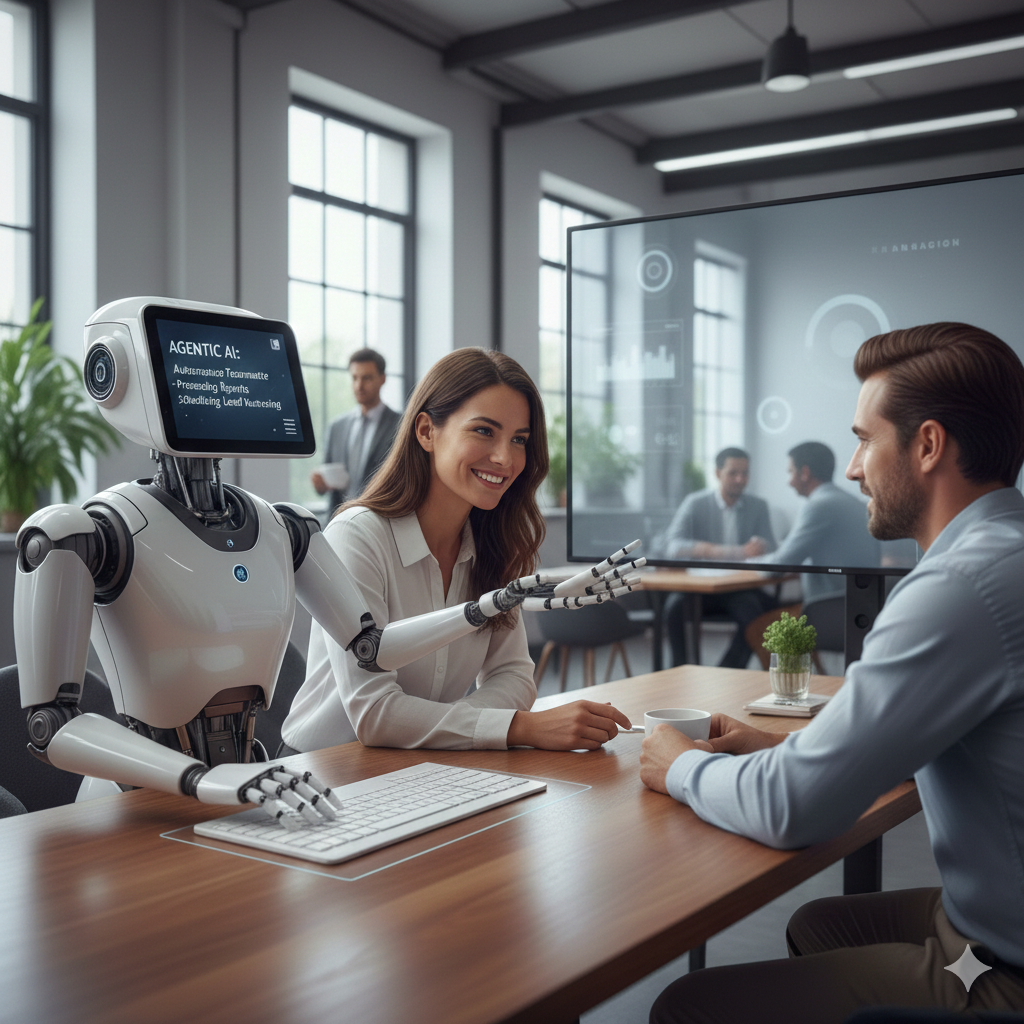
Research shows that salespeople who use AI effectively as a co-pilot are 3.7 times more likely to hit their targets. But we are already going a step further, towards agentic AI. These are autonomous AI systems that carry out repetitive tasks on their own: from finding leads and scheduling appointments to analysing customer conversations in real time and suggesting the next best action. Because AI takes over the administrative and preparatory burden (which sometimes swallows 60% of the time today), an unprecedented amount of time is freed up for real human connection.
3. The end of silos: RevOps as the new engine
Rapid digitalisation exposes a painful problem: departments that work past each other. Marketing generates leads, sales complains about their quality and customer service has to deal with unhappy customers. These silos lead to massive revenue loss, or revenue leakage.
The solution that will become the standard in 2026 is Revenue Operations (RevOps). This is the strategic merger of marketing, sales and customer success under one data-driven operating system. With one central truth in data (a single source of truth), a seamless chain emerges. Companies that implement this successfully not only see less waste, but also grow considerably faster and more profitably than their competitors.
4. The resurrection of the human (the value creator)
Does all this technology mean the end of the sales professional? Absolutely not. Paradoxically, the rise of AI makes human skills even more valuable.
Because transactional sales and standard information provision are being automated, the complex work remains. The ‘smooth talker’ disappears and makes way for a hybrid professional. This new salesperson is analytical, tech-savvy and exceptionally empathetic. Emotional intelligence, building deep trust and thinking strategically about the customer’s business case are the only elements an algorithm cannot copy (for now). Sales is transforming from a “closing machine” into a “value creator”.
Conclusion: winning outside starts inside
The speed at which sales is transforming can be overwhelming. Yet the biggest challenge does not lie in the technology itself. Adopting this new reality is 90% a matter of change management and culture, and only 10% an IT question.
For sales leaders (especially in small and mid-sized businesses), this means a new wind has to blow. Managing by spreadsheet and steering on the number of calls belong to the past. Leaders have to transform into coaches who support their teams with data, take away the fear of AI and build a culture of continuous experimentation.
The train of technological progress waits for no one. The winners of tomorrow are the companies that dare to invest today in the powerful combination of integrated data, AI as a co-pilot and the irreplaceable human touch.
Want to get started with these insights? Begin by breaking down the silos in your organisation and ask yourself: how do we actually make the buying process easier for our customer today?